What to Do When Anger Keeps Blowing Up Your Relationship
What to Do When Anger Keeps Blowing Up Your Relationship
couples therapy | marriage counseling | seattle | eastside | washington state
If you're the one who gets angry, it probably doesn't feel like aggression. It feels like fighting to be heard — fighting because something matters, because you've tried the calm version and it didn't work, because this is what it looks like when you actually care.
But from the other side of it, that same anger registers as threat. Your partner's nervous system hears danger and responds accordingly — shutting down, withdrawing, pushing back harder. And now neither of you is getting anywhere near what you actually needed.
This mismatch is one of the most painful cycles in a relationship. The angry partner feels silenced and dismissed. The partner receiving the anger feels overwhelmed and unsafe. Both feel completely misunderstood. And the cycle runs itself, independent of how much love is actually in the room.
Why keeping a lid on it doesn't help
Most of us absorbed some version of the message that good partners don't get angry — that staying calm, swallowing frustration, presenting a composed front is what mature love looks like. The problem is that suppressed anger doesn't disappear. It goes underground and turns into resentment, which is slower-moving and much harder to repair than the original feeling ever would have been.
There's also something that happens internally when anger gets consistently minimized — either by a partner or by yourself. The stories that form around it are corrosive: I'm too much. My feelings don't matter. If I show up fully, I'll be abandoned. These aren't just painful in the moment. Over time they erode the trust that makes a relationship feel safe.
I go deeper on this in this week's episode of Coupled With... — what anger is actually communicating inside a relationship, and why treating it as the problem rather than the signal keeps couples stuck in cycles that have nothing to do with the original issue.
What anger is actually telling you
From a nervous system perspective, anger is a signal — a cue that something feels like a boundary violation or a disconnection that matters. It's not proof that the relationship is broken. It's your body saying pay attention to this.
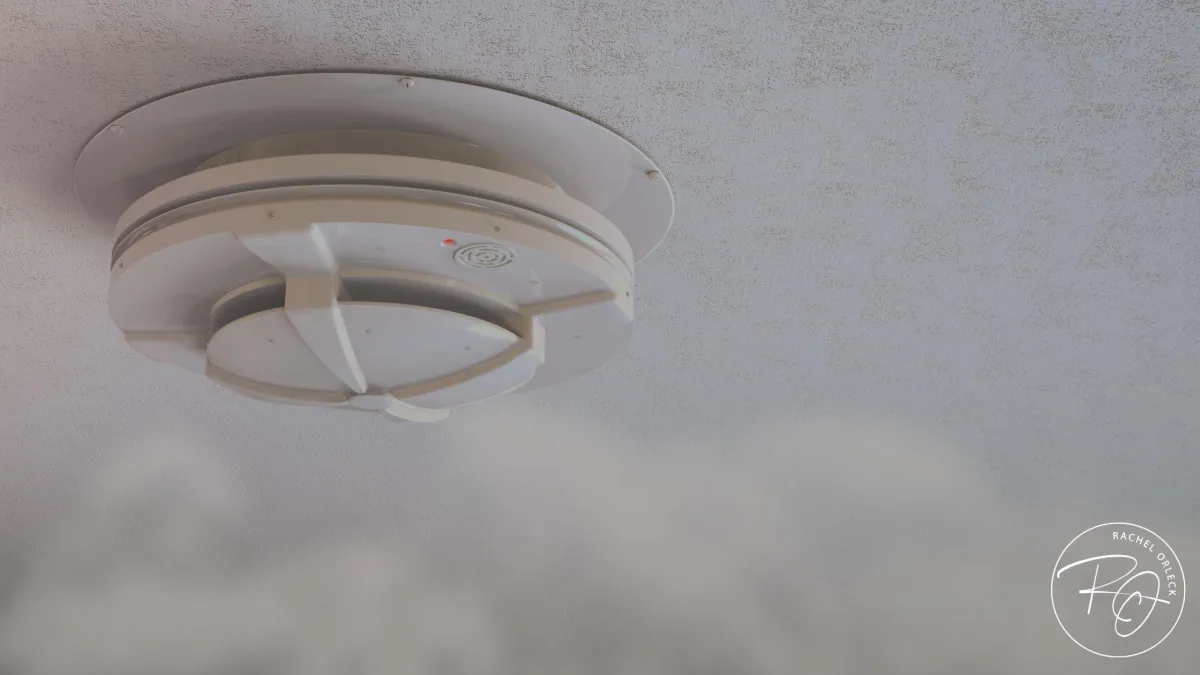
Think of it like a smoke detector. Loud, disruptive, impossible to ignore — but not the fire itself. You wouldn't rip it off the wall and pretend the smoke wasn't there. You'd go find the source. Anger works the same way. It's pointing at something that needs attention, not something that needs to be eliminated.
The problem in most relationships isn't that anger exists. It's that it gets treated as a threat to escape rather than a signal to explore — and those two responses lead to completely different places.
The difference between those two responses
When anger is treated as a threat, the reactions tend to sound like: calm down or I won't engage, you're overreacting, or silence and withdrawal until the temperature drops. These responses feel self-protective, and they are — but they also communicate to the angry partner that their emotional experience has to be managed before it will be taken seriously. That message tends to escalate rather than de-escalate.
When anger is treated as a signal, something different becomes possible. Something feels really off — what do you need right now? I can hear this matters to you. Let me slow down and actually understand. That shift — from bracing against the anger to getting curious about what's underneath it — changes the entire direction of the interaction.
In my Seattle couples therapy practice, this is one of the most consistent patterns I see: couples stuck in a cycle where anger is met with shutdown or counter-escalation, and nobody ever gets to what the anger was actually about.
What this looks like in practice
None of this means tolerating behavior that feels harmful or frightening. There's an important distinction between the signal — the anger, the urgency, the emotional intensity — and the delivery, meaning the tone, the volume, the specific words. You can acknowledge what someone is feeling without accepting how it's being expressed.
That sounds like: "I want to understand what's happening for you — and I need us to slow this down before I can really hear it." That's not dismissal. That's a boundary that keeps the conversation possible rather than shutting it down.
When one partner can stay grounded enough to do this — to take a breath, orient before responding, name what they're observing without judgment — it tends to create just enough space for the activated partner to come back into the conversation. Not always. But often enough to matter.
The couples who build real trust around anger aren't the ones who never get angry. They're the ones who've developed enough safety that anger doesn't have to mean danger. Where one person can bring something heated and the other can stay curious rather than reactive. Where the signal gets heard before it has to become a fire.
A question worth sitting with
The next time anger flares — yours or your partner's — before responding, pause long enough to ask: am I treating this as a threat to escape, or a signal to explore?
That single reframe doesn't fix everything. But it creates enough space for something other than the automatic response. And that space is where cycles actually start to change.
Listen to the Coupled With... podcast episode below
Why this matters for where you are right now
If anger in your relationship has become something both of you dread — if it consistently ends in shutdown, distance, or the same unresolved place — that pattern is worth working on directly. I work with couples throughout Washington state who are ready to stop running from what anger is pointing at and start actually getting to what's underneath it.
Rachel Orleck, Psy.D., is a licensed psychologist and certified EFT couples therapist with over 12 years of experience working with couples in distress. She offers couples therapy in Seattle, Eastside, and all Washington state.
